
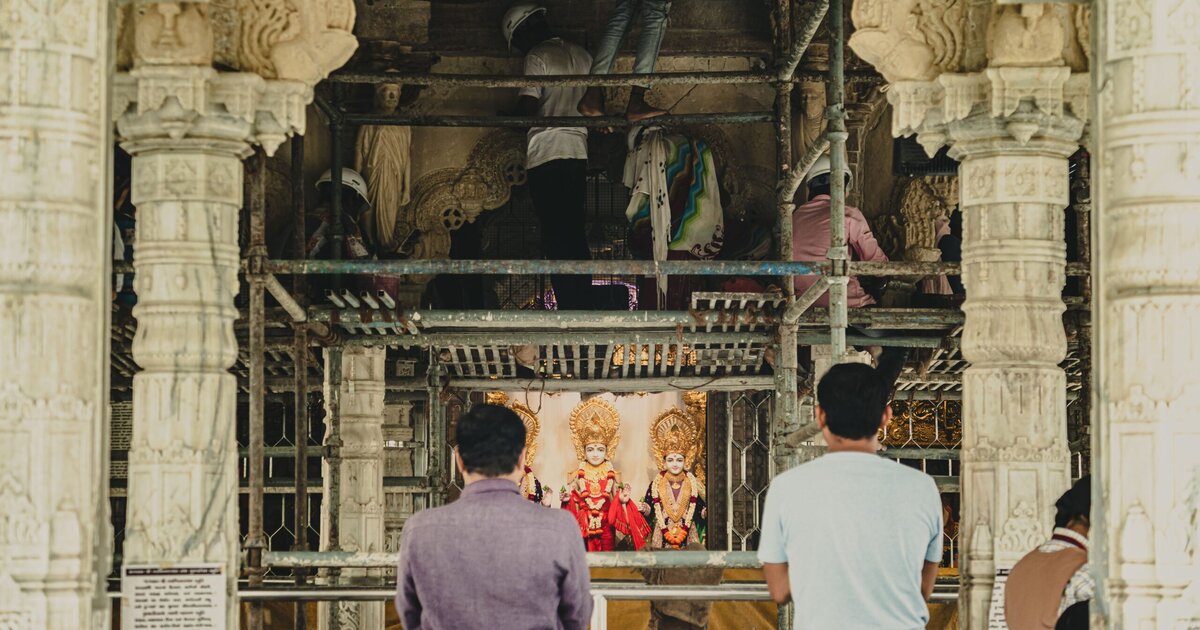
Naimisharanya Trip with Family , Every year, thousands of Hindu families complete the Varanasi–Ayodhya–Prayagraj circuit and return home spiritually fulfilled. And almost every one of them, when they later hear about Naimisharanya, says the same thing: “Why didn’t anyone tell us to add this?”
Naimisharanya is 90 kilometres from Lucknow. It is mentioned in the Rigveda, the Ramayana, the Mahabharata, and all eighteen Puranas. It is considered the first and most sacred of all Hindu pilgrimage sites — the only place where visiting once is believed to be equivalent to visiting all the important Tirthas.It is where Lord Vishnu is self-manifested — a Swayam Vyakta Kshetra — and where thousands of sages performed a thousand-year yajna under Sage Shaunaka, and where Suta Goswami first narrated the Puranas to the assembled 88,000 rishis.
Most families on the UP pilgrimage circuit have never heard of it.
This guide is for families who want to understand what Naimisharanya actually is, what the experience involves, and — most importantly — how to add it to an existing UP trip without overhauling your entire itinerary.
Naimisharanya Trip with Family

Why Naimisharanya Is Largely Unknown — and Why That Makes It Extraordinary
Naimisharanya’s relative obscurity is, paradoxically, its greatest gift to families who do visit.
The city has no major airport, no railway junction of significance, and no historic connection to modern India’s political or cultural narrative. It doesn’t appear in school textbooks or mainstream travel guides. The only reason people know to go is because someone who has been tells them.
What this means on the ground: Chakratirth, Hanuman Garhi, Lalita Devi Temple, Vyas Gaddi, Misrikh Teerth and Dadhichi Kund all lie within 2 kilometres of each other</cite> — and on most days, you experience them in relative quiet. No hour-long queues. No security crowds. No commercial pressure at the temple gates.
For families — especially those with young children encountering pilgrimage for the first time, or elderly grandparents who find large crowds exhausting — this quietness is not a limitation. It’s the entire point.
<cite index=”159-1″>Naimisharanya is unique in that it is the only place, apart from Patal Bhuvaneshwar, where it is believed that the entire pantheon of 33 crore Hindu Gods and Goddesses reside simultaneously.</cite> The sacred density of the place — so much concentrated in such a compact, peaceful geography — is what most families say they weren’t prepared for.
The Sacred Sites of Naimisharanya — What Your Family Will Visit
Chakra Tirth — The Central Sacred Act
<cite index=”156-1″>The name Naimisharanya is believed to have originated from Brahma’s Manomaya Chakra, which fell here. “Nemi” means the outer rim of the Chakra.</cite> The Chakra Tirth kund — a perfectly circular, spring-fed sacred pool — marks the spot where Lord Vishnu’s Sudarshana Chakra is believed to have fallen and entered the earth.
<cite index=”162-1″>The temple complex contains the sacred Chakra Teertha pond, believed to have been created by Lord Vishnu himself. Pilgrims take a holy dip in this kund — the water is fresh, cool, and in the October–March season, genuinely pleasant to enter. For families, this is the central ritual act of the Naimisharanya visit — children can wade in the shallow edges, elderly family members can touch the water and offer prayer if full immersion is not appropriate.
The kund is circular, enclosed, and calm — very different from the open-river experience at the Sangam. For families nervous about river currents (as at Prayagraj), the Chakra Tirth offers an accessible and deeply sacred alternative.
Lalita Devi Temple — The Shakti Peetha
<cite index=”163-1″>Naimisharanya is one of the 51 Shakti Peethas in Hindu tradition</cite>, with the Lalita Devi Temple marking the spot where the goddess is believed to have manifested. Shakti Peethas are among the most powerful sacred sites for women’s devotion in the Hindu tradition — many families make this their primary reason for including Naimisharanya in their circuit.
The temple is active and beautiful — mornings filled with bhajan, flower offerings, and the scent of incense. For families with daughters and grandmothers especially, the Lalita Devi darshan holds specific meaning.
Suta Gadi Ashram — Where the Puranas Were First Spoken
<cite index=”158-1″>Naimisharanya is the place where Sri Suta — disciple of Sage Vyasa — narrated the Itihasas and Puranas to the assembled sages.</cite> The Suta Gadi Ashram marks the seat where this narration happened. <cite index=”163-1″>The eighteen Puranas were first narrated in Naimisharanya by Suta Goswami.</cite>
For families with children who have grown up hearing Bhagavata Purana or Vishnu Purana stories, standing at the place where those stories were first told aloud — to 88,000 assembled rishis, in this exact forest — is one of those moments that makes abstract mythology suddenly, physically real.
Vyas Gaddi — Where the Puranas Were Written
The seat of Maharshi Vyas — the compiler of the Vedas, author of the Mahabharata, and organiser of the Puranas. <cite index=”157-1″>The Puranas were written by Maharshi Vyas at this holy place.</cite> A simple, quiet shrine that most visiting families spend 15–20 minutes at — and consistently remember as one of the most atmospherically powerful stops of the day.
Hanuman Garhi, Naimisharanya
Not to be confused with Ayodhya’s Hanuman Garhi — Naimisharanya’s Hanuman temple is a ground-level shrine within the sacred forest area, peaceful and uncrowded. It is considered an essential stop in the complete Naimisharanya parikrama circuit.
Dadhichi Kund, Misrikh — The Extension Worth Making
<cite index=”157-1″>Around 10 km from Naimisharanya, Misrikh is home to Dadhichi Kund — the site where Sage Dadhichi donated his bones to the gods so that a weapon could be fashioned to destroy the demon Vrittasura.</cite> For families with older children who are engaged with Hindu mythological narratives, Dadhichi Kund adds a remarkable chapter to the Naimisharanya day. Most families who know to go spend 30–45 minutes here before returning.
How to Add Naimisharanya to Your Existing UP Family Trip
This is the most practical section of this guide — and the most important.
Naimisharanya is not a standalone destination for most families from outside UP. It is a single-day addition that transforms a Varanasi–Ayodhya–Prayagraj circuit from a three-city trip into one of the most complete sacred journeys in North India. Here is how it slots in.
If You’re Routing Through Lucknow
Lucknow is the most natural base for Naimisharanya. It is 90–95 km from the city — approximately 2 to 2.5 hours by cab on NH24.
The cleanest routing:
- Delhi or long-distance city → arrive Lucknow (Day 1, evening)
- Day 2: Lucknow to Naimisharanya (depart 7:00 AM, return by 5:00 PM) — full sacred circuit
- Day 3: Lucknow to Ayodhya (2.5 hours, morning) — Ram Mandir darshan
- Day 4: Ayodhya to Varanasi (4.5 hours) — overnight stay
- Day 5–6: Varanasi (Kashi Vishwanath + Ganga Aarti)
- Day 7: Varanasi to Prayagraj (Sangam) — return home from Prayagraj or back through Lucknow
This 7-day circuit is among the most spiritually complete family pilgrimage formats available in North India. TripCosmos’s North India Pilgrimage Family Package covers exactly this circuit — with overnight stays, private AC cab throughout, and Naimisharanya included as a structured day with guide.
If You’re Already Visiting Varanasi + Ayodhya
Naimisharanya can be added as Day 1 or Day 2 of a trip that starts from Lucknow before continuing to Ayodhya. The Lucknow → Naimisharanya → Ayodhya routing (depart Lucknow 7:00 AM, complete Naimisharanya by 3:00 PM, reach Ayodhya by 6:00 PM) is a single long day that covers two sacred destinations without any backtracking.
TripCosmos’s Lucknow Customized Family Ritual Trip Package is built exactly for this format — families who want to begin their UP sacred circuit with Naimisharanya before proceeding through Ayodhya and Varanasi.
As a Standalone Day Trip from Lucknow
For families visiting Lucknow for other reasons — family functions, weddings, business travel — Naimisharanya is the single most powerful sacred day trip available from the city. Depart Lucknow by 7:00 AM. Complete the full Chakra Tirth, Lalita Devi, Suta Gadi, Vyas Gaddi, and Hanuman Garhi circuit. Add Dadhichi Kund at Misrikh if time allows. Return to Lucknow by 5:00–6:00 PM.
TripCosmos provides cab service from Lucknow to Naimisharanya with drivers familiar with the temple circuit sequence and the Misrikh extension — fixed pricing, no meter surprises, AC vehicle throughout.
Practical Planning Details
Getting There
From Lucknow: 90–95 km on NH24 toward Sitapur. 2 to 2.5 hours by private cab. This is the only practical option — Naimisharanya has no meaningful public transport connection that works for family travel with elderly members or children.
From Ayodhya: Approximately 130 km via Lucknow. Most families doing Ayodhya → Naimisharanya route their cab through Lucknow rather than taking the more circuitous direct route.
Vehicle recommendations:
- Family of 4: Sedan or Ertiga (₹2,000–₂,800 one-way from Lucknow)
- Family of 6–7 with elderly: Innova Crysta (₹2,800–₃,800 one-way)
- Joint family of 8–12: Tempo Traveller from Varanasi or Lucknow — keeps the entire family together and reduces per-person cost significantly
Temple Timings
<cite index=”159-1″>Temple timings at Naimisharanya are 5:00 AM to 9:00 PM, with a closure between 12:00 PM and 4:00 PM in the afternoon.</cite>
Plan your day accordingly: Arrive by 9:00–9:30 AM. Complete Chakra Tirth, Lalita Devi, and Suta Gadi by noon. Lunch in the town during the afternoon closure (simple, vegetarian, affordable — ₹80–₁50 per person at local dhabas). Resume with Vyas Gaddi, Hanuman Garhi, and Dadhichi Kund from 4:00 PM. Depart by 5:30 PM.
Accommodation (for Overnight Stays)
Naimisharanya has basic dharamshala accommodation starting from ₹500–₈00 per room per night for families who want to experience the early morning atmosphere of the sacred forest — including the 5:00 AM opening aarti. Mid-range guest houses are available from ₹1,200–₂,000 per room. Most day-trip families do not stay overnight.
What to Carry
- Dry clothes for the Chakra Tirth dip (the kund is enclosed and clean; a full set for each family member)
- Puja samagri: marigold flowers, incense, a small diya — available at stalls near the kund
- Water and snacks for children during the midday closure period
- Comfortable walking footwear — the circuit between temples involves 1–1.5 km of easy flat walking
- Government-issued ID for all adults
Best Time to Visit
<cite index=”156-1″>Naimisharanya has specific festivals that draw large pilgrim gatherings</cite> — Kartik Purnima (October–November) and Magh Mela (January–February) are the most significant. Outside festival periods, October to March offers the best weather and comfortable crowd levels. Monsoon (July–September) is humid but the forest is extraordinarily green — a different kind of experience, not recommended for elderly family members.
Cost Overview: Naimisharanya Family Day Trip
| Item | Budget Range (Family of 4) |
|---|---|
| Cab from Lucknow (return, sedan) | ₹4,000 – ₹5,600 |
| Chakra Tirth entry | Free |
| Lalita Devi Temple | Free |
| All other temples | Free |
| Puja samagri (4 people) | ₹200 – ₹400 |
| Lunch (4 people, local dhaba) | ₹400 – ₆00 |
| Guide (optional, recommended) | ₹500 – ₈00 for the day |
| Misrikh / Dadhichi Kund extension | Included in cab if booked correctly |
| Total (family of 4, day trip) | ₹5,100 – ₇,400 |
| Per person | ₹1,275 – ₁,850 |
The Naimisharanya Chakra Tirth Snan Tour Package from TripCosmos starts from ₹4,500 for a group and includes private cab from Lucknow, guided temple circuit, Chakra Tirth ritual coordination, and return transfer — with everything confirmed in writing before departure.
Why Most Families Skip Naimisharanya — and Why That Should Change
The honest reason families skip Naimisharanya is simple: they don’t know it exists until after they’ve been to Varanasi, Ayodhya, and Prayagraj. The three-city UP triangle is well-marketed and well-known. Naimisharanya is not — despite the fact that the Hindu scriptures consistently position it as the most sacred site of all.
<cite index=”156-1″>Visiting Naimisharanya is considered equivalent to visiting all important pilgrimage sites.</cite> For a family that has completed Varanasi and Ayodhya, adding this single day — the 90 km from Lucknow, the quiet forest, the Chakra Tirth dip, the Suta Gadi Ashram where the Puranas were first spoken — rounds out a pilgrimage in a way that feels, for most families, genuinely complete.
Plan your full North India family pilgrimage circuit — including Naimisharanya — with TripCosmos. Contact the team with your travel dates and group composition for a complete day-wise itinerary.
Website: https://tripcosmos.co WhatsApp: +91 9336116210
Frequently Asked Questions
Q1: What is Naimisharanya and why is it significant for Hindu families?
Naimisharanya is a Swayam Vyakta Kshetra — a place where Lord Vishnu is self-manifestedand the site where the eighteen Puranas were first narrated by Suta Goswami to 88,000 assembled sages.It is considered the first and most sacred of all Hindu Tirth Sthans, and visiting it is believed to be equivalent to visiting every important pilgrimage site in India.For families, it is a deeply meaningful destination that is surprisingly peaceful and uncrowded compared to the major UP pilgrimage cities.
Q2: How far is Naimisharanya from Lucknow, and how do we get there with family?
Naimisharanya is 90–95 km from Lucknow on NH24 toward Sitapur — approximately 2 to 2.5 hours by private cab. There is no practical public transport option for families, particularly those with elderly members or young children. TripCosmos provides private AC cab service from Lucknow to Naimisharanya with drivers familiar with the complete temple circuit. For groups of 8 or more, a tempo traveller is the most cost-efficient option.
Q3: Can we visit Naimisharanya as a day trip from Lucknow, or do we need to stay overnight?
A day trip is comfortably manageable — depart Lucknow by 7:00 AM, complete the full sacred circuit including Chakra Tirth, Lalita Devi, Suta Gadi, Vyas Gaddi, and Dadhichi Kund, and return to Lucknow by 5:00–6:00 PM. An overnight stay in Naimisharanya is an option for families who want to experience the 5:00 AM opening aarti at the Chakra Tirth — a rare and extraordinarily peaceful experience that day-trippers miss.
Q4: Is Naimisharanya suitable for elderly grandparents?
Yes — it is among the most accessible pilgrimage sites in UP for elderly family members. All the main sites — Chakratirth, Hanuman Garhi, Lalita Devi Temple, Vyas Gaddi, Misrikh Teerth and Dadhichi Kund — lie within 2 km of each other on flat, manageable ground. The Chakra Tirth dip is in an enclosed, calm kund rather than an open river. There are no significant steps or climbs on the main circuit. TripCosmos’s senior parent assistance tour to Naimisaranya provides dedicated support throughout the visit for families with elderly grandparents.
Q5: How does Naimisharanya fit into the standard Varanasi–Ayodhya–Prayagraj family circuit?
The cleanest routing adds Naimisharanya as Day 1 or Day 2 of a Lucknow-entry UP circuit — before continuing to Ayodhya. Lucknow → Naimisharanya → Ayodhya → Varanasi → Prayagraj is a 7-day circuit that covers the most complete sacred geography in North India without backtracking. TripCosmos’s North India Pilgrimage Family Package includes Naimisharanya as a structured day within the full circuit, with private cab, accommodation, and guide throughout.
Naimisharanya’s position in Hindu sacred literature is unambiguous — the scriptures describe it as the holiest forest in the world, the place where knowledge first passed from sages to humanity, the spot where Lord Vishnu chose to manifest. What’s equally unambiguous is that most modern families never make it there.
Adding Naimisharanya to your UP family pilgrimage is not a complicated decision. It is 90 km from Lucknow, a single day, almost entirely free to visit, and consistently described by families who have been as the most unexpectedly moving stop of their entire North India circuit.
The forest is waiting. The Chakra Tirth is still flowing. TripCosmos will handle the rest.
Visit: https://tripcosmos.co | WhatsApp: +91 9336116210




Comments are closed.